

In today's highly competitive business environment, making the right decisions is essential for long-term success. Businesses generate large amounts of data every day through customer interactions, sales, marketing campaigns, financial transactions, and operational activities. When properly analyzed, this data becomes a valuable asset that helps organizations make smarter and more strategic decisions.
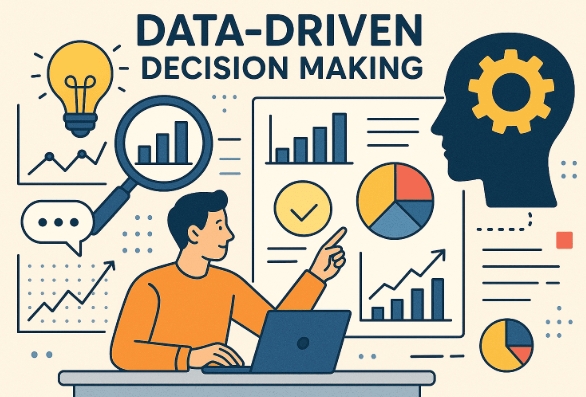
Data-driven decision making (DDDM) is the process of using data analysis and measurable insights to guide business decisions. Instead of relying solely on intuition or guesswork, businesses use real-time information to identify opportunities, solve problems, and improve overall performance.
What Is Data-Driven Decision Making?
Data-driven decision making is the practice of collecting, analyzing, and interpreting business data to support strategic planning and operational decisions.
Common data sources include:
- Sales reports
- Customer feedback
- Website analytics
- Marketing performance
- Financial records
- Inventory data
- Employee performance metrics
By using these insights, businesses can make more accurate and confident decisions.
Why Data-Driven Decision Making Matters
Using data effectively helps businesses:
- Reduce uncertainty
- Improve operational efficiency
- Understand customer behavior
- Identify growth opportunities
- Increase profitability
- Minimize business risks
Organizations that make decisions based on reliable data are often more agile and competitive.
Benefits of Data-Driven Decision Making
1. Improves Business Performance
Data helps identify strengths, weaknesses, and areas that require improvement.
Benefit:
Businesses can optimize operations and improve overall performance.
2. Enhances Customer Understanding
Analyzing customer data reveals purchasing behavior, preferences, and feedback.
Benefit:
Businesses can deliver personalized products, services, and marketing campaigns.
3. Supports Better Strategic Planning
Business leaders can evaluate market trends and forecast future opportunities.
Benefit:
Improves long-term planning and business growth strategies.
4. Reduces Business Risks
Data helps identify potential risks before they become major problems.
Benefit:
Supports proactive decision making and risk management.
5. Optimizes Marketing Campaigns
Marketing analytics reveal which campaigns generate the best results.
Benefit:
Improves marketing ROI and customer acquisition.
6. Increases Operational Efficiency
Performance data helps eliminate inefficiencies and optimize business processes.
Benefit:
Reduces costs while improving productivity.
7. Improves Financial Management
Financial reports provide insights into revenue, expenses, and profitability.
Benefit:
Supports better budgeting and investment decisions.
8. Encourages Continuous Improvement
Regular performance monitoring enables businesses to refine strategies over time.
Benefit:
Creates a culture of innovation and ongoing improvement.
Steps to Implement Data-Driven Decision Making
1. Define Business Goals
Identify the objectives you want to achieve through data analysis.
2. Collect Relevant Data
Gather accurate data from trusted business systems and customer interactions.
3. Analyze the Data
Use analytics tools to identify trends, patterns, and opportunities.
4. Make Informed Decisions
Use insights to guide strategic and operational decisions.
5. Monitor Results
Measure outcomes and adjust strategies as needed for continuous improvement.
Best Practices
- Use accurate and up-to-date data
- Invest in reliable analytics tools
- Train employees to interpret data
- Monitor key performance indicators (KPIs)
- Review business performance regularly
- Combine data with business expertise
Common Mistakes to Avoid
- Relying on incomplete or outdated data
- Ignoring customer feedback
- Focusing on too many metrics
- Making decisions without clear objectives
- Failing to review results regularly
Benefits for Businesses
Organizations that embrace data-driven decision making often experience:
- Better decision quality
- Higher operational efficiency
- Improved customer satisfaction
- Increased profitability
- Reduced business risks
- Stronger competitive advantage
- Sustainable long-term growth
Conclusion
Data-driven decision making has become an essential practice for modern businesses seeking sustainable growth and competitive advantage. By leveraging accurate business data, organizations can make informed decisions, improve customer experiences, optimize operations, and reduce uncertainty. Businesses that build a data-driven culture are better equipped to respond to market changes, identify new opportunities, and achieve long-term success.