

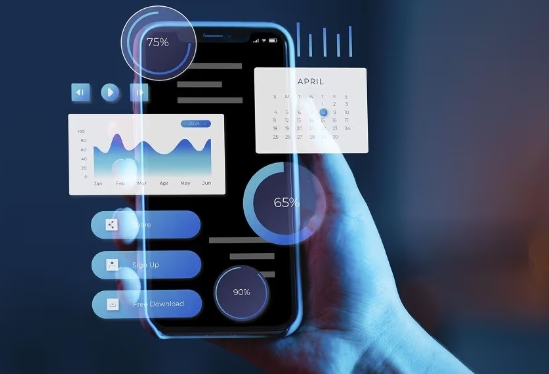
Mobile applications have become an essential part of daily life, and users now expect apps to be fast, intuitive, and visually appealing. As competition in the app market increases, businesses must stay updated with the latest design trends to deliver better user experiences and maintain customer engagement.
In 2026, mobile app design is moving beyond aesthetics and focusing more on usability, personalization, accessibility, and intelligent interactions. These trends are helping businesses create applications that are both functional and engaging.
Why Mobile App Design Matters
A well-designed mobile app can:
-
Improve user satisfaction
-
Increase engagement and retention
-
Strengthen brand identity
-
Reduce user frustration
-
Improve conversion rates
Good design is not only about appearance—it directly impacts how users interact with an application.
Top Mobile App Design Trends for 2026
1. Minimalist and Clean Interfaces
Simple layouts with clear navigation continue to dominate mobile app design.
Trend: More whitespace, fewer distractions, and focused content.
Benefit: Users can find information quickly and complete tasks more easily.
2. Personalized User Experiences
Apps are increasingly adapting content, recommendations, and interfaces based on user behavior.
Examples:
-
Personalized dashboards
-
Custom content feeds
-
Location-based recommendations
Benefit: Higher engagement and customer satisfaction.
3. AI-Powered Interactions
Artificial intelligence is becoming a key part of mobile app experiences.
Examples:
-
Smart chatbots
-
Voice assistants
-
Predictive recommendations
-
Automated support
Benefit: Faster and more personalized user interactions.
4. Advanced Dark Mode Design
Dark mode is evolving beyond a simple color switch.
Trend: Better contrast, accessibility, and battery optimization for OLED devices.
Benefit: Improved readability and reduced eye strain.
5. Micro-Interactions and Animations
Subtle animations provide feedback and make apps feel more responsive.
Examples:
-
Button animations
-
Loading indicators
-
Swipe effects
-
Success confirmations
Benefit: More engaging and intuitive user experiences.
6. Accessibility-First Design
Designing apps for users with different abilities is becoming a priority.
Features Include:
-
Larger touch targets
-
Voice support
-
Screen reader compatibility
-
High-contrast options
Benefit: Better usability for a wider audience.
7. Gesture-Based Navigation
Modern apps are reducing dependence on traditional buttons.
Trend: Swipe, drag, and gesture-based interactions.
Benefit: Cleaner interfaces and faster navigation.
8. Rich Visual Content
High-quality illustrations, icons, and visual elements help communicate information effectively.
Benefit: Stronger brand identity and better user engagement.
9. Faster and Lightweight Design
Users expect apps to load quickly and run smoothly.
Trend: Optimized assets, efficient code, and lightweight interfaces.
Benefit: Improved performance and user retention.
10. Cross-Platform Design Consistency
Businesses want a consistent experience across Android and iOS devices.
Trend: Unified design systems and reusable components.
Benefit: Stronger branding and reduced development complexity.
Best Practices for Modern Mobile App Design
-
Prioritize user needs
-
Keep navigation simple
-
Use readable typography
-
Optimize for different screen sizes
-
Test designs with real users
-
Maintain consistent branding
-
Focus on speed and performance
Common Design Mistakes to Avoid
-
Overcrowded interfaces
-
Small touch targets
-
Inconsistent navigation
-
Excessive animations
-
Poor color contrast
-
Ignoring accessibility requirements
Benefits for Businesses
Businesses that adopt modern app design trends often experience:
-
Higher user engagement
-
Better app ratings and reviews
-
Increased customer retention
-
Stronger brand perception
-
Improved conversion rates
-
Competitive advantage in the market
Conclusion
Mobile app design trends in 2026 are centered around simplicity, personalization, accessibility, and intelligent user experiences. By adopting modern design practices such as AI-powered interactions, clean interfaces, gesture navigation, and accessibility-focused features, businesses can create mobile applications that meet evolving user expectations. Investing in user-centric app design helps improve engagement, customer satisfaction, and long-term business growth.